Safe Opening in Alameda
$198 to $529. Bedroom, closet and back-office safes opened by hand where they stand, whether the combination left with the previous owner or the boltwork has stopped moving. A new number is set to something you choose, and the sensible place to write it down is not the room it is standing in.
$198–$529
Typical price
18 min
Avg. arrival
24/7
Availability
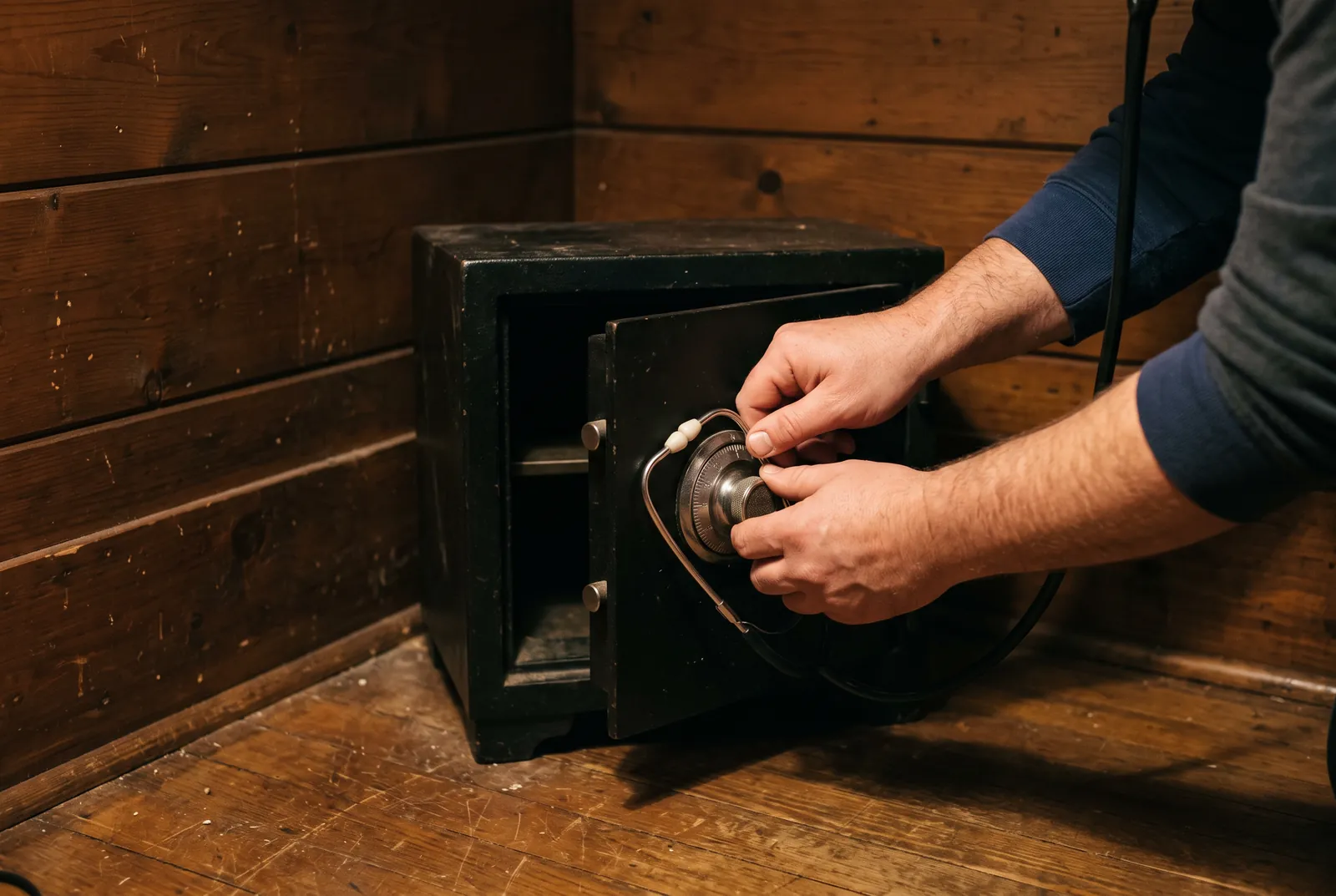
Safes fail in a handful of ways and the way decides the route in. Sometimes the number was never recorded, or it lived in the head of somebody who is not around to ask. Sometimes an electronic pad has gone dark, and behind that is usually a battery terminal gone green or a split ribbon running back to the lock body. Sometimes bolt work has bound up, which tends to follow the safe being shifted from one place to another. And sometimes a relocker has tripped, which is not a fault: that part exists to do precisely what it just did.
There is a version of this call particular to Alameda. A house changes hands with the furniture still in it and a safe in a closet or bolted into a back porch comes along with the sale while the combination leaves with the seller. Buildings divided into flats produce a variation: a safe left in a basement or a shared storage room, belonging to nobody currently living there. In that case the conversation is with the owner or the management company, because the room is shared rather than anyone's flat.
Slow methods go first and each gets its full run. Reading a wheel pack by hand can take an hour or longer, and that hour is well spent, because a safe that opens without a hole in it has lost none of its value. If hands are not enough, an instrument reads the wheels instead. Where a pad still lights and chirps while nothing shifts inside, the trouble is past the pad rather than in it, most often a solenoid with no pull left, and that class of fault usually opens with no bit involved at all.
Should a hole become the only option, you are asked first and the answer is yours. The point is taken from the maker's own diagram for that model, keeping away from the glass plate that trips a relocker. A hardened plug closes it afterward, the lock behind it is repaired or exchanged for a working one, and where the hole went is recorded for whoever needs to open the safe after you. Plugged properly, a drilled safe carries on working.
Household safes, gun safes, office safes and drop safes in a shop or a suite all come under this page. Establishing that the safe is yours takes about a minute and the form it takes depends on how you came by it. Bought with a house: your ID and the closing statement. Inherited: a letter from the executor, or the relevant page of a trust. Standing in a business: the lease, with a named officer of that business there in person.
The figure runs $198 to $529 with the $89 trip inside. A failed pad or a plain electronic lockout: $198. Reading a mid-size dial by hand sits around the middle. Drilling a high-security lock or a heavy gun safe and putting it properly back together: $529. A range is given on the phone; the exact number is set once the safe is in front of the technician, and from there it stays put, including if a bit turns out to be necessary. When it opens you pick the new number, then work the door open and shut a few times over before you put anything back in.
“We bought the house with most of the furniture in it, including a small safe in the back bedroom that the sellers could not open either. $365 said on the call and $365 charged. He manipulated it open by hand in a bit under an hour without cutting into the door of it, then set it to a number I chose and had me work the dial twice myself before he packed anything away. Nothing inside but a lease from the nineteen-eighties and a spare key to a door that no longer exists, which was disappointing but not his fault.”
Sixteen jobs, fourteen of them with a range and two quoted once the openings have been counted on site. What moves a figure inside its range here is how many households the door serves: one cylinder and one key is the low end, while a street door that every flat carries a key to means a key plan rather than a lock, and that takes the high one. Say which door it is and who the building answers to, and the range closes to a single number on the call.
- Daytime (7am–8pm)standard rates
- Evening (8pm–12am)+$50
- Overnight (12am–7am)+$88
FAQ
Safe Opening: quick answers
The pad still beeps and lights up, and nothing behind it moves.+
Then the number and the pad are both doing their job and the trouble is past them, most often a solenoid with no pull left, or bolt work bound under the weight of the door. That sort usually opens with no hole at all. The lock body is exchanged once the door is clear, and the number you set afterward is known only to you.
An hour of turning a dial sounds slow. Why not simply drill it?+
Drilling would be quicker and would leave you with a plug to live with and a lock to buy. The slow route leaves the safe as it was, so it goes first. You are quoted a figure rather than an hourly rate, which means the extra time is on us and not on your invoice.
There is a safe in the shared basement of our building and nobody knows whose it is.+
Then it is a conversation with the owner or the management company, since a basement like that is shared space rather than anybody's flat. Once they say go ahead, it is opened where it stands and set to a number they choose. Bolted down it stays bolted down. Nothing has to be dragged out or tipped over.
Related
More residential services
Open 24 hours, 7 days
Say whether it is the street door or your own, and the rest of the call is short
Alameda and Bay Farm, at any hour. Which leaf it is decides who approves the work, the door itself decides the work, and the work decides the number, which is settled on the phone with the $89 visit and any late hour already inside it. It reads the same on the receipt. Ninety days on the labor, in writing.